Vibration Control That Actually Works
Here's the thing about vibration problems: they're expensive when you ignore them. That slight hum in your recording studio? It's showing up on every track. The HVAC unit rattling through your building? It's cutting years off the equipment's life while annoying everyone within three floors.
We've spent decades fixing these issues—not just selling products, but actually solving the underlying problems. Whether you're running a professional studio in, managing industrial equipment, or dealing with commercial HVAC systems that won't quit complaining, unwanted vibrations compromise everything. Product quality drops. Equipment dies early. People get frustrated.
Look, the truth is most vibration control comes down to proper engineering, not magic materials. We use AMC Mecanocaucho isolation products (because they've proven themselves over 50 years), but more importantly, we know how to spec them correctly. That means analyzing your specific vibration sources, understanding how they travel through your structure, and implementing solutions that actually measure up in real-world conditions.
Vibration Isolation Mounts
Think of isolation mounts as shock absorbers for your equipment—except they're not absorbing impacts, they're preventing vibrations from ever reaching your building structure in the first place. The concept is simple: decouple the vibrating equipment from everything around it. The execution? That's where most people mess up.
We've got rubber mounts, neoprene configurations, and combined elastomeric solutions because different problems need different fixes. Your lightweight audio gear doesn't need the same treatment as a 500-pound industrial machine. And here's what matters: proper selection. You can't just guess at load requirements or ignore frequency characteristics and expect things to work. Static deflection, resonance frequencies, dynamic capacity—these aren't just technical buzzwords, they're the difference between a mount that works and one that doesn't.
Our technical team runs the actual calculations. Because installing the wrong mount is arguably worse than no mount at all—you've spent money, done the work, and probably made things more complicated without solving anything.
Where We Install These
- Precision manufacturing equipment (when .001mm matters)
- Medical imaging systems (vibration-free diagnostics)
- Laboratory instruments (because shaky data is useless data)
- Commercial refrigeration units (quieter kitchens, longer compressor life)
- Power generation equipment (reducing structural fatigue)
Hydraulic Vibration Dampers
When basic isolation mounts aren't cutting it, hydraulic dampers step in. These use fluid displacement to convert vibration energy into heat through controlled internal pathways. What that means for you: significantly better attenuation across a wider frequency range, plus improved stability for sensitive equipment.
The mechanics are elegant—precision-machined components ensure consistent damping over years of service. But they're not cheap, and they're not always necessary. We typically recommend hydraulic solutions for heavy machinery, high-vibration industrial environments, or anywhere you need both isolation and serious energy absorption. Transportation systems use these. So do marine applications where equipment takes a constant beating.
Many of our hydraulic designs are adjustable, which matters more than you'd think. Being able to fine-tune damping characteristics after installation saves projects when conditions don't match initial calculations. And for critical applications—marine type approvals, international certifications—we've got options that've been tested under conditions that would destroy standard mounts.
The reality is hydraulic dampers cost more upfront. But if your application needs them, nothing else will work as well or last as long.
Sylomer Vibration Isolation Pads
Sylomer is genuinely different—and that's coming from people who are generally skeptical about "revolutionary" materials. This specialized polyurethane has a cellular structure that delivers exceptional dynamic properties while supporting massive loads. It doesn't degrade like rubber. Temperature swings don't faze it. Twenty years from installation, it's still performing at spec.
What makes Sylomer useful is its ability to handle low-frequency isolation. Traditional materials struggle with low-frequency vibrations—the kind that travel through building structures and show up three floors away. Sylomer's unique composition handles these frequencies while maintaining structural integrity under heavy loads. That's not marketing speak; it's measurable performance.
We use Sylomer pads for floating floor systems in recording studios, precision machinery foundations, even bridge bearing installations. The material comes in various densities and thicknesses because—surprise—not every application is identical. Some installations need maximum deflection, others prioritize load capacity. Getting this wrong means your expensive isolation pad becomes an expensive problem.
The versatility extends to specialized applications too. Wind turbine foundations. Seismic isolation systems. Anywhere you need reliable vibration control for decades, not just years.
Spring Vibration Isolators for HVAC
HVAC vibration is one of those problems that seems minor until you actually measure the impact. The equipment generates constant vibration. That vibration travels through mounting points into your building structure. The structure amplifies certain frequencies. Suddenly you've got noise complaints, reduced equipment life, and mounting stress on structural components.
Spring isolators solve this cost-effectively. They provide predictable isolation with linear deflection characteristics—meaning performance stays consistent across varying operating loads. We offer both restrained and unrestrained configurations depending on whether you're mounting equipment on floors, ceilings, or rooftops.
The springs are corrosion-resistant because HVAC equipment lives in harsh environments. Indoor, outdoor, doesn't matter—they're built to last. But here's what people often miss: proper HVAC isolation isn't just about noise reduction (though that's nice). It's about equipment longevity and energy efficiency. Isolated equipment runs smoother, uses less energy, and doesn't wear out mounting hardware prematurely.
We help with selection and installation guidance because incorrect spring rates or improper mounting can negate all the benefits. You probably don't need us to install it—most contractors can handle that—but getting the specs right matters.
Studio Soundproofing Solutions
Recording studios fail acoustically for two reasons: airborne sound leakage and structure-borne vibration transmission. Most people focus exclusively on the first problem—building heavy walls, sealing gaps—while completely ignoring vibrations traveling through the building structure. That's why you can spend a fortune on soundproofing and still hear footsteps, HVAC rumble, or traffic vibration on your recordings.
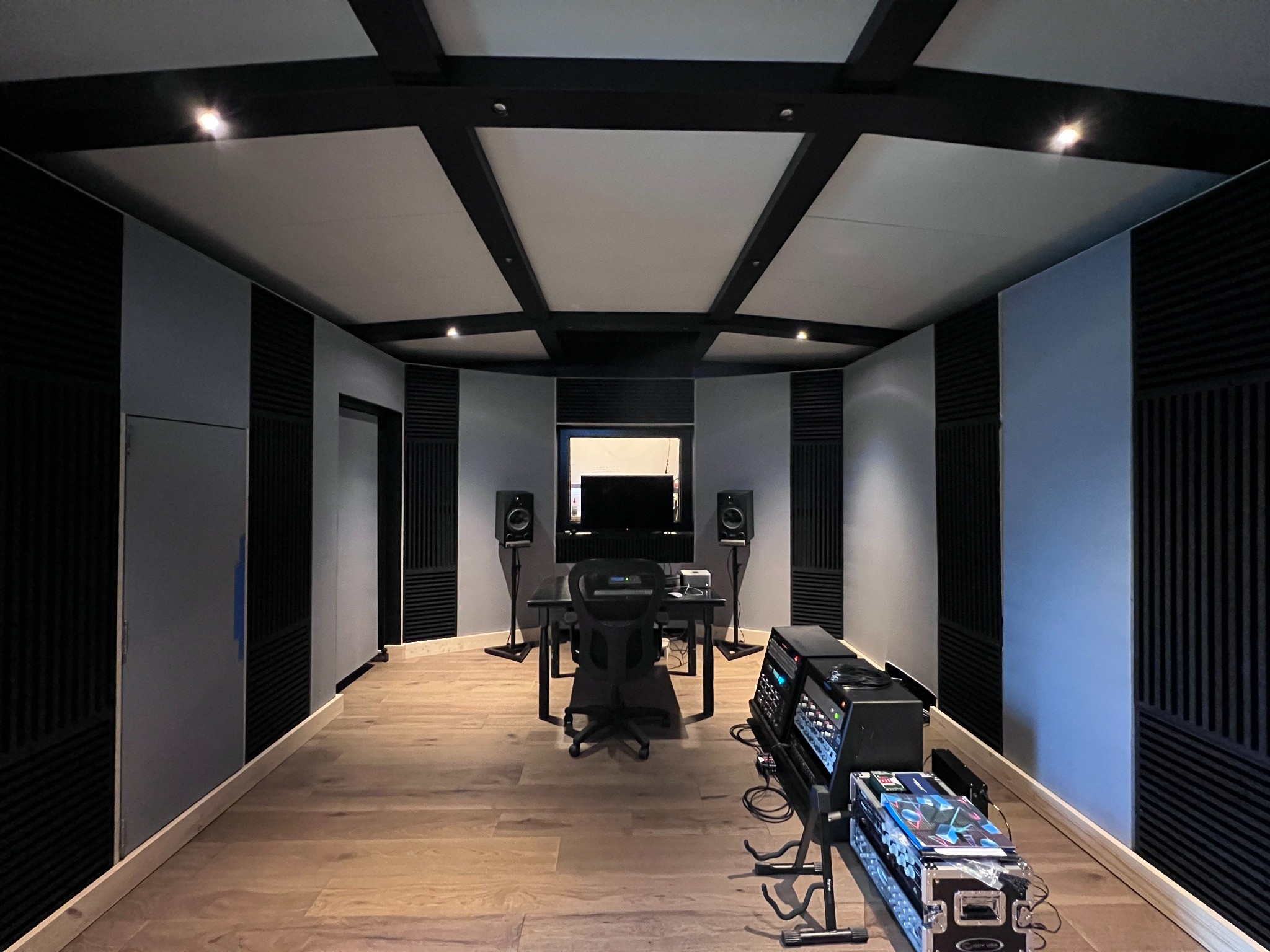
Our studio soundproofing addresses both problems. Walls, ceilings, floors, utility penetrations—every sound transmission path gets attention. We use decoupling techniques that physically separate studio elements from the building structure, acoustic seals that actually work (not just caulk and hope), and specialized insulation materials chosen for measured performance, not marketing claims.
New construction is obviously easier, but we've done plenty of retrofit projects in existing buildings. It's more complicated—you're working around existing structure, utilities, sometimes limited space—but it's usually doable if you've got reasonable expectations and budget.
Beyond basic isolation, we handle acoustic treatment: reflection control, bass management, reverberation optimization. Because an isolated room that sounds terrible is just an expensive closet. Professional-grade acoustic performance means you can actually trust what you're hearing during recording and mixing. That's the whole point.
How We Actually Approach These Projects
Every project starts with assessment. What's vibrating? Where's it going? What's sensitive? We measure, analyze, and develop targeted solutions—not generic recommendations pulled from a catalog. This analytical approach costs more time upfront but prevents expensive mistakes and ensures predictable results.
We maintain ISO 9001 and ISO 14001 certifications, which mostly means we document everything and follow consistent processes. But practically speaking, it means you're getting engineered solutions, not guesswork. Our team stays current with industry developments because this field evolves—new materials, better testing methods, refined installation techniques.
We offer free anti-vibration calculations and on-site surveys for qualifying projects. That "qualifying" part usually just means your project is substantial enough to justify our time. For smaller jobs, we can often work from photos, measurements, and a detailed conversation.
Custom fabrication is available when standard products don't fit your needs. Specialized mounting configurations, complete isolation platforms, whatever it takes. We've built plenty of one-off solutions for unique constraints. It costs more and takes longer, but sometimes that's what the project needs.
What You Actually Get
Reduced Structure-Borne Noise
Proper isolation stops vibrations from traveling through your building. That means quieter adjacent spaces and sensitive equipment that doesn't pick up mechanical interference. Simple concept, but the impact is dramatic when done correctly.
Extended Equipment Lifespan
Vibration kills equipment slowly. Mounting hardware loosens. Seals degrade. Components fatigue. Isolation eliminates this mechanical stress, which translates directly to longer service life and lower maintenance costs. We've seen equipment last 10+ years longer with proper isolation.
Improved Acoustic Performance
For recording studios, controlled vibration environments mean accurate monitoring and clean recordings. For precision manufacturing, it means consistent tolerances and reliable quality control. The better you control vibration, the better your results.
Energy Efficiency
Isolated equipment runs more efficiently because it's not fighting against mounting stress or transmitting energy into the structure. The gains are usually modest—a few percentage points—but they add up over years of operation.
Industries We Work With
We've installed vibration control solutions across diverse industries. Each has specific requirements and different definitions of "good enough."
Recording Studios
Broadcast Facilities
HVAC Systems
Industrial Manufacturing
Medical Equipment
Marine Applications
Power Generation
Laboratories
Why Work With Brandt Audio Devices
We've been doing acoustic engineering since 1969—that's not just experience, it's institutional knowledge about what works and what fails. Our partnership with AMC Mecanocaucho gives us access to world-class isolation technology that's been refined over 50+ years. These aren't startup products with questionable longevity; they're proven solutions with decades of field performance.
What sets us apart is the engineering focus. Every project gets individual attention. We don't just sell products—we solve problems. That means custom fabrication when standard solutions don't fit, detailed testing to verify performance before installation, and ongoing technical support after the sale. Because equipment doesn't care what we promised; it either works or it doesn't.
We ship globally with next-day delivery options where available. Projects stay on schedule regardless of location. And our technical support is actually responsive—probably because we're engineers who understand the urgency when installations go sideways.
That's the pitch. If your vibration problems are costing you money or compromising quality, we should probably talk.
Frequently Asked Questions
How do I determine which vibration isolation mounts are suitable for my application?
Honestly? You probably can't without running the calculations. Mount selection depends on equipment weight, vibration frequencies, required isolation efficiency, and environmental factors. Static deflection requirements, resonance avoidance, dynamic load capacities—these all interact in ways that aren't intuitive. Send us your equipment specs, operating conditions, and what you're trying to achieve. We'll run the analysis and recommend actual solutions, not just sell you whatever's in stock.
What makes Sylomer vibration isolation pads different from standard rubber mounts?
Sylomer's cellular polyurethane structure delivers superior performance compared to conventional rubber. Higher load capacity with better deflection characteristics. Exceptional low-frequency isolation. Consistent long-term performance regardless of temperature swings. Standard rubber degrades over time—becomes brittle, loses elasticity, eventually stops working. Sylomer maintains its properties for decades. It costs more upfront, but for precision applications or permanent installations, it's usually worth it.
Can your spring vibration isolators hvac products be used for both new installations and retrofit projects?
Yes—both new construction and retrofits. We've got solutions for floor-mounted, ceiling-suspended, and rooftop equipment. Retrofits are more complicated because you're working around existing mounting arrangements and access limitations, but it's rarely impossible. Send us photos of your current setup and equipment specs. We'll figure out what works and whether any structural modifications are needed.
Do you provide installation support for studio soundproofing projects?
We don't install directly, but we provide detailed technical support: installation guidance, specification documents, contractor coordination, and post-installation verification testing. Most contractors can handle the physical work if they've got proper documentation. We review plans, consult throughout the project, and verify performance after completion. We also know qualified installation partners in various regions if you need referrals. The key is getting the design right—installation is usually straightforward if the specs are solid.
Ready to Fix Your Vibration Problem?
Talk to our engineering team. We'll assess your situation, run the calculations, and provide realistic quotes. Free anti-vibration calculations and on-site surveys available for substantial projects.
Request Free Consultation